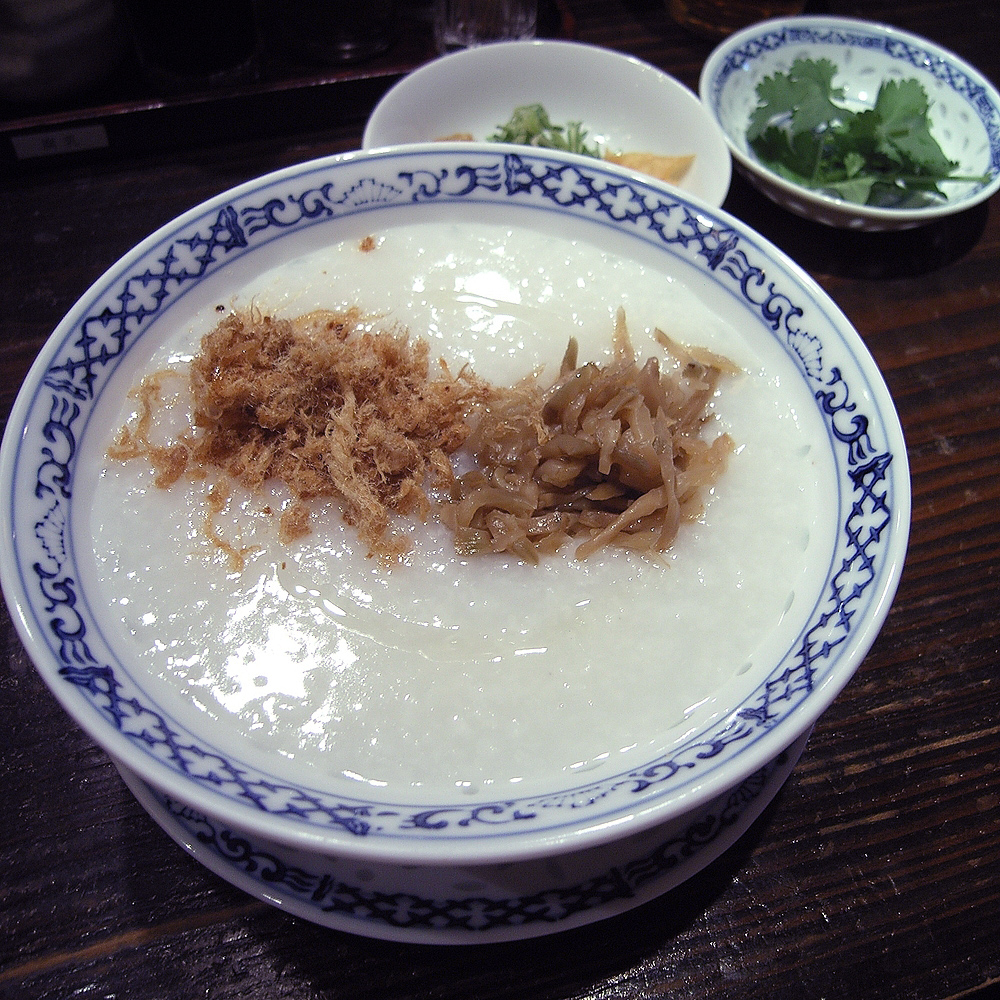
Cantonese Congee (Silky Rice Porridge)
广州砂锅粥
The ultimate comfort food — silky smooth Cantonese rice porridge topped with century egg and lean pork. Healing, gentle, and deeply satisfying.
📋 Ingredients
What Is Cantonese Congee (Silky Rice Porridge)?
💡 Ingredient Notes: Congee (粥, zhōu) — also called rice porridge or jook — is China's ultimate comfort food. Slow-simmered until the rice breaks down into a silky, creamy texture, it's eaten for breakfast, when sick, or as a late-night snack. The Cantonese version is famous for its silky smoothness (achieved by long, slow cooking with stock), and is often served with century egg and lean pork (皮蛋瘦肉粥). It's gentle on the stomach, hydrating, and somehow feels like a warm hug.
Ingredients You'll Need
For the Congee Base
- 1 cup jasmine rice, rinsed
- 8 cups chicken or pork stock (or water)
- 1 tsp salt
- 1 tsp cooking oil (helps rice break down)
Toppings
- 150g (⅓ lb) lean pork, sliced thin
- 1 century egg (皮蛋), diced
- 1 thumb ginger, cut into fine matchsticks
- 2 scallions, finely chopped
- 1 tsp white pepper
- 1 tsp sesame oil
- Optional: fried shallots, chili oil, soy sauce
📝 Instructions
Prep the rice
Rinse the rice well until the water runs clear. Toss with 1 teaspoon oil and a pinch of salt — this helps the grains break down faster. Optional pro move: freeze the rinsed rice for 30 minutes before cooking. Frozen rice breaks down into silky porridge in half the time.
Cook the congee
Bring the stock to a boil in a heavy pot. Add the rice, stir well, then reduce heat to low. Simmer uncovered for 60-90 minutes, stirring every 10 minutes to prevent sticking. The congee is done when it's thick and creamy — the rice grains should have mostly dissolved into a silky porridge.
Add the pork
About 20 minutes before the congee is done, add the sliced lean pork. Stir to separate the slices. The pork will cook gently in the porridge and become very tender.
Season
Add salt to taste. The congee should be savory but mild — the toppings add the bold flavors.
Serve
Ladle into bowls. Top each bowl with diced century egg, ginger matchsticks, scallions, white pepper, and a drizzle of sesame oil. Each person can add chili oil or soy sauce to taste.
💡 Pro Tips
- 💡💡 The secret to silky congee is patience. Don't rush the simmer — the long cooking is what breaks the rice into creamy perfection.
- 💡💡 Freeze the rinsed rice for 30 minutes before cooking. The frozen grains crack and break down much faster, cutting cooking time in half.
- 💡💡 Use stock, not water, for a richer base. Chicken stock works great; pork stock is traditional.
- 💡💡 Stir from the bottom regularly — congee sticks and burns easily. A heavy-bottomed pot helps.
- 💡💡 Adjust thickness to taste — add more stock if you prefer it soupier, cook longer for thicker.
📊 Nutrition Facts
❓ Frequently Asked Questions
What does century egg taste like? Century egg (皮蛋) has a unique flavor — earthy, slightly sulfurous, with a creamy yolk and gelatinous white. It's an acquired taste but pairs perfectly with the mild congee. If you're unsure, start with just half an egg per bowl.
Can I make this in a rice cooker or Instant Pot? Yes — many rice cookers have a 'congee' or 'porridge' setting. Instant Pot: high pressure for 30 minutes, natural release. Both produce good results, though stovetop gives the silkiest texture.
Is congee good when sick? Yes — it's the traditional Chinese remedy for colds, stomach bugs, and recovery. It's easy to digest, hydrating, and the warmth is soothing. For sick days, skip the strong toppings and add extra ginger.
Can I make it vegetarian? Absolutely — use vegetable stock and top with mushrooms, peanuts, scallions, and fried tofu. A drizzle of sesame oil and soy sauce brings it together.