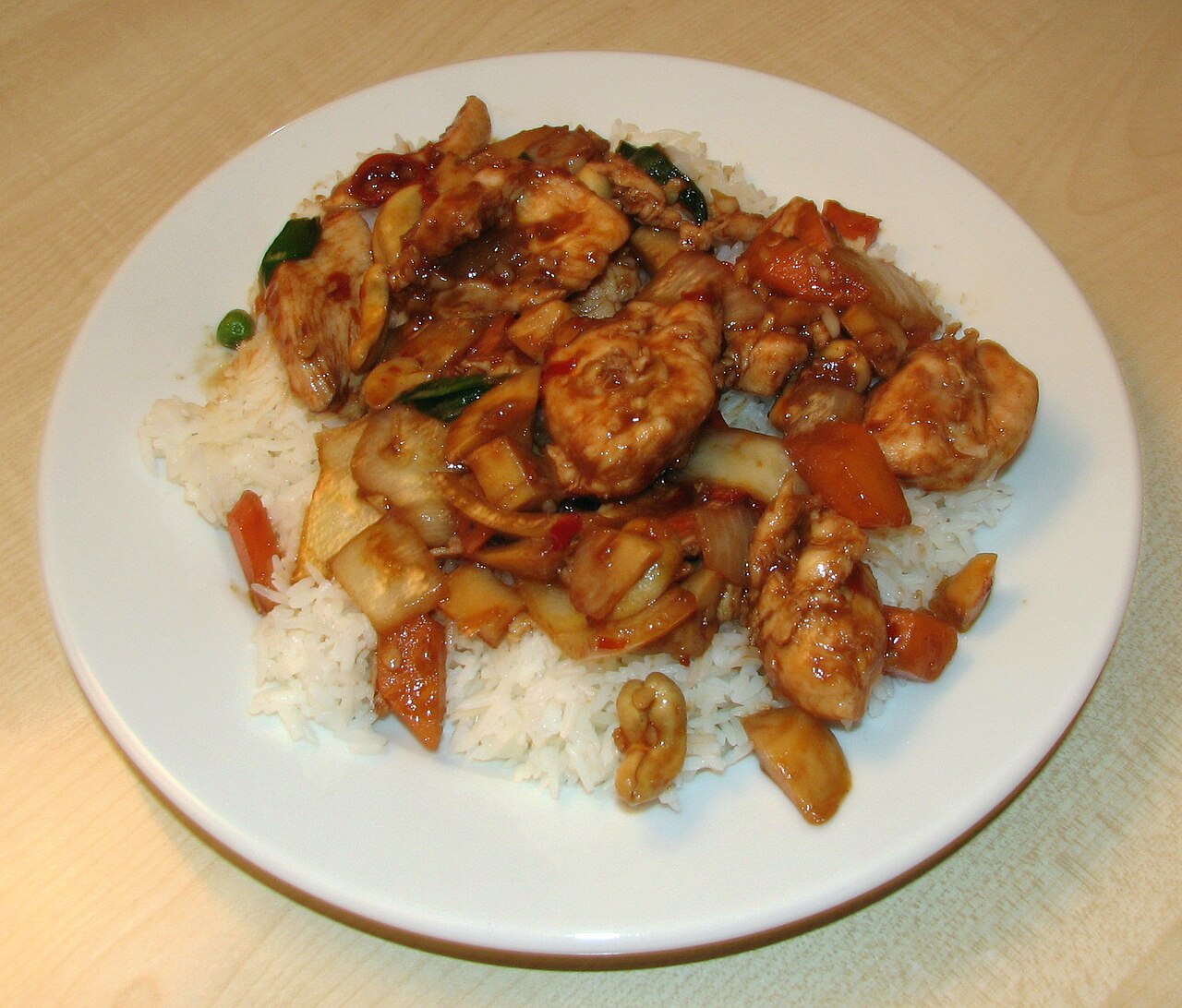
Kung Pao Chicken
宫保鸡丁
Authentic Kung Pao Chicken features tender chicken, crunchy peanuts, and dried chilies in a savory-sweet-spicy sauce. This recipe delivers the genuine restaurant flavor.
📋 Ingredients
What Is Kung Pao Chicken?
💡 Ingredient Notes: Kung Pao Chicken (宫保鸡丁, gōng bǎo jī dīng) is a classic Sichuan dish named after Ding Baozhen, a Qing dynasty official whose title was "Gong Bao" (Palace Guardian). The dish combines tender chicken cubes, roasted peanuts, and dried red chilies in a savory-sweet-spicy sauce that perfectly balances málà (麻辣) flavors.
Ingredients You'll Need
💡 Ingredient Notes: Before you start, gather all your ingredients. Stir-frying happens fast — you won't have time to measure mid-cook.
💡 Ingredient Notes: The key to authentic flavor is Sichuan peppercorns for the signature numbing sensation, and Chinese black vinegar (Chinkiang vinegar) for that deep, complex tang.
For the Marinade
- 500g (1 lb) chicken thighs, cut into 2cm cubes
- 1 tbsp light soy sauce
- 1 tsp cornstarch
- Pinch of salt
For the Sauce
- 1 tbsp light soy sauce
- 2 tbsp Chinese black vinegar
- 1 tbsp sugar
- 1 tsp cornstarch
- 1 tsp sesame oil
For the Stir-Fry
- 8–12 dried red chilies, cut into 2cm pieces
- 1 tsp Sichuan peppercorns
- 4 scallions, white parts only
- 3 cloves garlic, sliced
- 1 tbsp ginger, thinly sliced
- ⅓ cup (50g) roasted peanuts
- 2 tbsp cooking oil
Ingredient Notes
💡 Ingredient Notes: Can't find Chinese black vinegar? Use a mix of balsamic vinegar and rice vinegar (1:2 ratio). No Sichuan peppercorns? Tasmanian pepper is the closest substitute — but you will miss the signature numbing sensation.
📝 Instructions
Marinate the Chicken
Combine chicken cubes with 1 tbsp soy sauce, 1 tsp cornstarch, and a pinch of salt. Mix well and let rest for 15 minutes while you prepare all other ingredients.
Make the Sauce
In a small bowl, mix 1 tbsp soy sauce, 2 tbsp black vinegar, 1 tbsp sugar, 1 tsp cornstarch, and 1 tsp sesame oil. Stir until the sugar completely dissolves. Set aside.
Stir-Fry Aromatics
Heat your wok over high heat until smoking. Add 2 tbsp oil. Toss in Sichuan peppercorns and dried chilies — fry for 15 seconds until fragrant but not burnt. Add garlic, ginger, and scallions; stir-fry for another 20 seconds.
Cook the Chicken
Add the marinated chicken to the wok. Spread it into a single layer and let it sear undisturbed for 30 seconds, then stir-fry vigorously for 2–3 minutes until the chicken is cooked through and lightly browned.
Combine and Finish
Pour the sauce around the edges of the wok (not directly onto the chicken). Stir-fry for 30 seconds as the sauce thickens and beautifully glazes every piece. Add the peanuts, toss twice, and immediately remove from heat.
Serve
Transfer to a plate and garnish with extra scallion greens. Serve with steamed jasmine rice. Best eaten fresh — the peanuts lose their crunch if stored.
💡 Pro Tips
- 💡Use chicken thighs, not breast — they stay juicy with high-heat wok cooking. Breast dries out quickly.
- 💡Prep everything first (mise en place) — once the wok is hot, everything happens in minutes.
- 💡Keep chilies whole for a milder flavor, or break them open for more heat and visual drama.
- 💡Add peanuts at the very end — they only need a quick toss to coat in sauce while staying crunchy.
📊 Nutrition Facts
❓ Frequently Asked Questions
Can I use chicken breast instead of thighs? Yes, but thighs are strongly recommended. If using breast, reduce cooking time by 30–45 seconds and consider velveting it first (egg white + cornstarch coating).
I don't have a wok — can I use a regular pan? A large stainless steel or cast iron skillet works. The key is high heat and not overcrowding. Work in batches if needed.
How can I make this less spicy? Reduce dried chilies to 3–4 and keep them whole. Increase the sugar slightly to balance the heat with sweetness.
Can I make this gluten-free? Yes! Use tamari instead of soy sauce. Chinkiang vinegar is typically naturally gluten-free. Cornstarch is already GF.