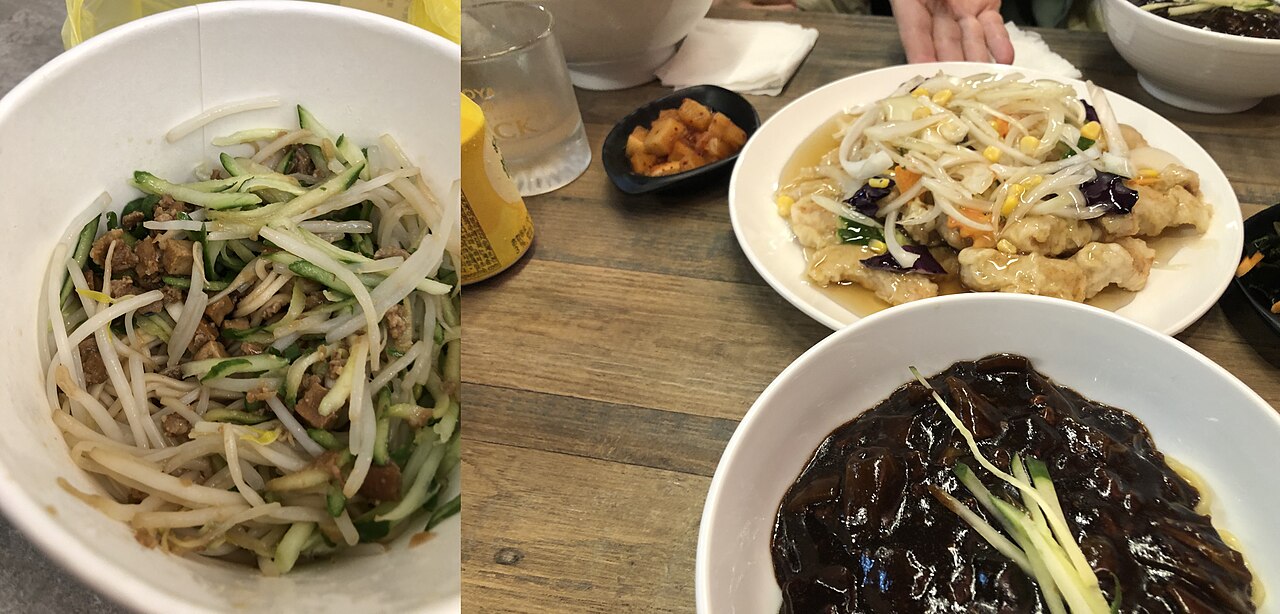
Beijing Zhajiang Noodles
北京炸酱面
Beijing's most iconic noodle dish — hand-pulled noodles topped with a rich, savory fermented bean sauce and fresh crunchy vegetables. The ultimate Beijing comfort food.
📋 Ingredients
What Is Beijing Zhajiang Noodles?
💡 Ingredient Notes: Zhajiang Noodles (炸酱面, zhá jiàng miàn) is Beijing's signature street food and home-cooked comfort dish. The name literally means "fried sauce noodles" — and that sauce is everything. It's made from yellow soybean paste (黄酱) slowly fried with ground pork until deeply savory, then spooned over chewy wheat noodles and topped with a rainbow of fresh, crunchy vegetables.
💡 Ingredient Notes: Every Beijing family has their own version. The vegetables (called càimǎ 菜码) change with the seasons — cucumber in summer, bean sprouts and radish in winter. But the soul of the dish is always that dark, umami-bomb sauce.
Ingredients You'll Need
💡 Ingredient Notes: The secret to authentic zhajiang is using yellow soybean paste (黄酱), not regular soy sauce. This fermented paste gives the sauce its signature deep, rich, slightly sweet umami flavor. You can find it at any Asian grocery store or online.
For the Sauce (炸酱)
- 250g (½ lb) ground pork (70% lean, 30% fat)
- 4 tbsp yellow soybean paste (黄酱)
- 2 tbsp sweet bean paste (甜面酱) — optional but adds complexity
- 1 tbsp cooking oil
- 1 cup water or stock
- 1 tsp sugar
- 2 cloves garlic, minced
- 1 piece ginger, minced
For the Vegetables (菜码)
- 1 cucumber, julienned
- 100g bean sprouts, blanched
- 1 small carrot, julienned
- 4-5 green beans, cut into small pieces and blanched
- 2 scallions, finely chopped
For the Noodles
- 400g fresh wheat noodles (拉面 or 手擀面)
- Hand-pulled or knife-cut noodles are best
📝 Instructions
Prepare the Sauce (炸酱)
-
Heat the oil in a wok over medium-low heat. Add the minced garlic and ginger, stir for 30 seconds until fragrant.
-
Add the ground pork. Break it up with your spatula and cook until it's fully browned and the fat has rendered — about 3-4 minutes. The pork should be in small, separate pieces, not clumped.
-
Add the soybean paste. Turn the heat down to low. Stir the paste into the pork — it will look dry at first. Cook for 5-7 minutes, stirring constantly, until the oil turns reddish and the paste smells deeply roasted. This slow-frying is what builds the flavor — don't rush it.
-
Add water and sugar. Pour in the water gradually, stirring until you get a thick sauce consistency (like loose peanut butter). Simmer for 3-4 more minutes. Taste and adjust — it should be intensely savory, slightly sweet.
Prepare the Vegetables (菜码)
-
While the sauce simmers, blanch the bean sprouts and green beans in boiling water for 1-2 minutes, then plunge into ice water to keep them crisp.
-
Julienne the cucumber and carrot into thin matchsticks (about 5cm long). The vegetables should be raw and crunchy — they provide freshness against the rich sauce.
Cook the Noodles
-
Boil the noodles in plenty of water according to package directions. Fresh noodles take 2-3 minutes, dried take 4-6.
-
Drain and rinse briefly with warm water (not cold — cold noodles make the sauce seize up). Shake off excess water.
Assemble
-
Place noodles in a large bowl. Top with the sauce — about 3-4 tablespoons per portion (the sauce is strong, you don't need much).
-
Arrange the vegetables in neat piles around the bowl — cucumber, sprouts, carrot, green beans, scallions.
-
Mix thoroughly before eating. Use chopsticks to toss everything together so the sauce coats every strand of noodle and the vegetables distribute evenly.
💡 Pro Tips
- 💡💡 Don't skip the slow-frying step. The 5-7 minutes of frying the soybean paste is what separates authentic zhajiang from bland sauce. The paste should darken and smell nutty.
- 💡💡 Use pork with some fat. Lean pork will make the sauce dry. The rendered fat carries the flavor.
- 💡💡 Fresh noodles beat dried. Look for fresh wheat noodles in the refrigerated section of Asian markets. They have the chewy texture that dried noodles can't match.
- 💡💡 Serve immediately. The sauce thickens as it sits, so don't let it sit on the noodles too long before mixing.
- 💡💡 Customize your vegetables. Traditional toppings also include: edamame, celery, radish, eggs, tofu skin. Use whatever is fresh.
📊 Nutrition Facts
❓ Frequently Asked Questions
Can I use regular soy sauce instead of yellow soybean paste? No — soy sauce is too thin and salty. The yellow soybean paste is the entire point of this dish. It's cheap and available online — search "黄酱" or "yellow soybean paste".
Is this spicy? No, Beijing zhajiang noodles are not spicy. If you want heat, add a spoonful of chili oil on top.
Can I make it vegetarian? Yes — substitute the ground pork with diced mushrooms and tofu, and use the same sauce technique. The fermented bean paste is already plant-based.
What's the difference between zhajiang noodles and jajangmyeon (Korean version)? Korean jajangmyeon uses black bean paste (chunjang) and is sweeter, darker, and thicker. Chinese zhajiang is lighter, with a more complex fermented flavor.